Publications
Artificial Intelligence in the U.S. Military Health System: Forging a New Frontier for Clinical Care and Efficiency
ABSTRACT
The Military Health System (MHS) has historically been at the forefront of innovation in medicine and science, but it has also historically struggled to implement battlefield innovations or civilian technologies for wider domestic use. Artificial intelligence (AI) has emerged as a transformative force in health care with civilian health systems and institutions at the forefront of these innovations.

Changes in body mass index and behavioral health among adolescents in military families during the COVID-19 pandemic: a retrospective cohort study
Abstract
Background: Widely published findings from the COVID-19 pandemic show adverse effects on body mass index (BMI) and behavioral health in both adults and children, due to factors such as illness, job loss, and limited opportunity for physical and social activity.
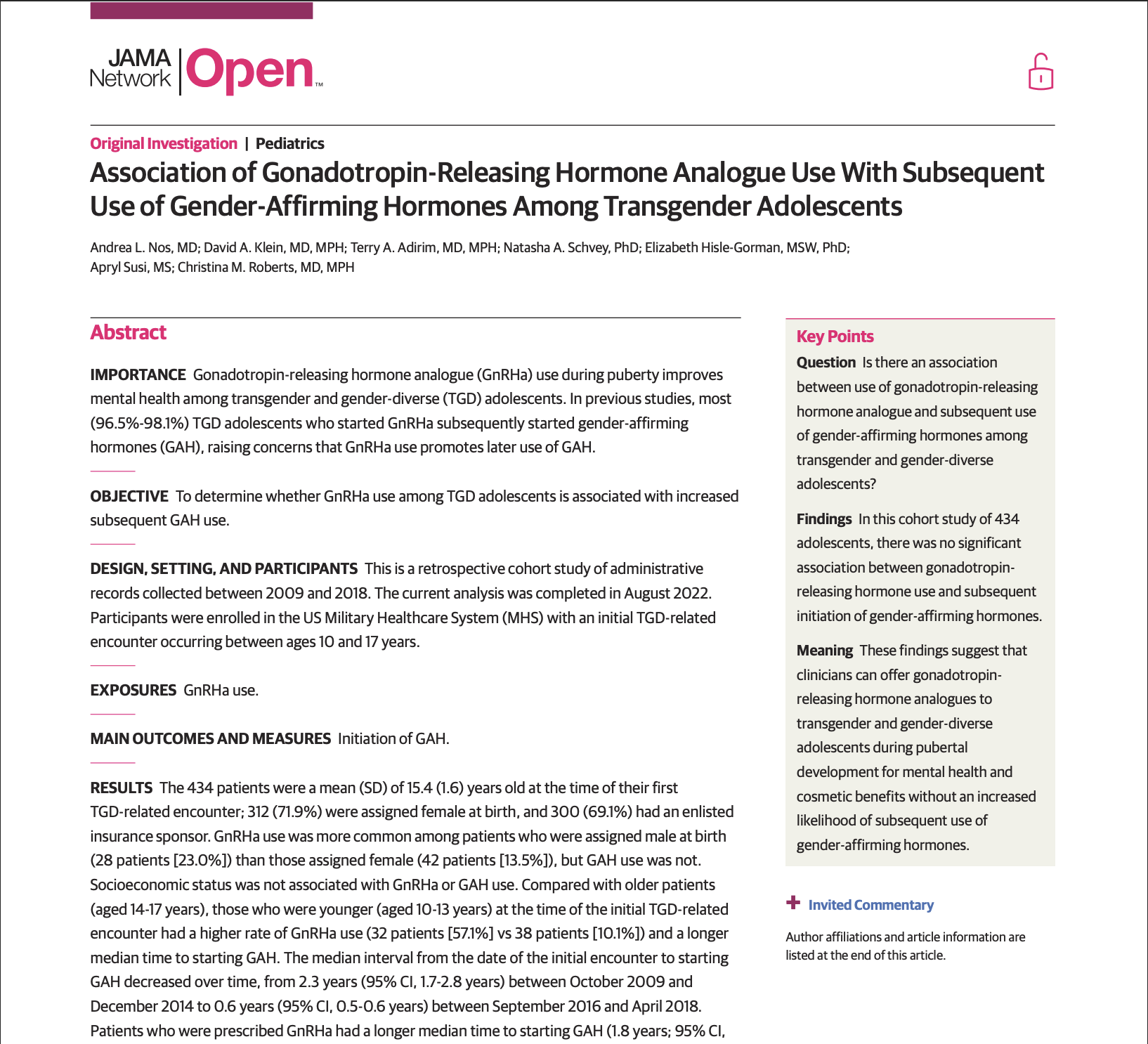
Association of Gonadotropin-Releasing Hormone Analogue Use With Subsequent Use of Gender-Affirming Hormones Among Transgender Adolescents
Abstract
Importance: Gonadotropin-releasing hormone analogue (GnRHa) use during puberty improves mental health among transgender and gender-diverse (TGD) adolescents. In previous studies, most (96.5%-98.1%) TGD adolescents who started GnRHa subsequently started gender-affirming hormones (GAH), raising concerns that GnRHa use promotes later use of GAH.

Continuation of Gender-affirming Hormones Among Transgender Adolescents and Adults
Abstract
Introduction: Concerns about future regret and treatment discontinuation have led to restricted access to gender-affirming medical treatment for transgender and gender-diverse (TGD) minors in some jurisdictions. However, these concerns are merely speculative because few studies have examined gender-affirming hormone continuation rates among TGD individuals.
Preventing Home Medication Administration Errors
Medication administration errors that take place in the home are common, especially when liquid preparations are used and complex medication schedules with multiple medications are involved; children with chronic conditions are disproportionately affected. Parents and other caregivers with low health literacy and/or limited English proficiency are at higher risk for making errors in administering medications to children in their care.
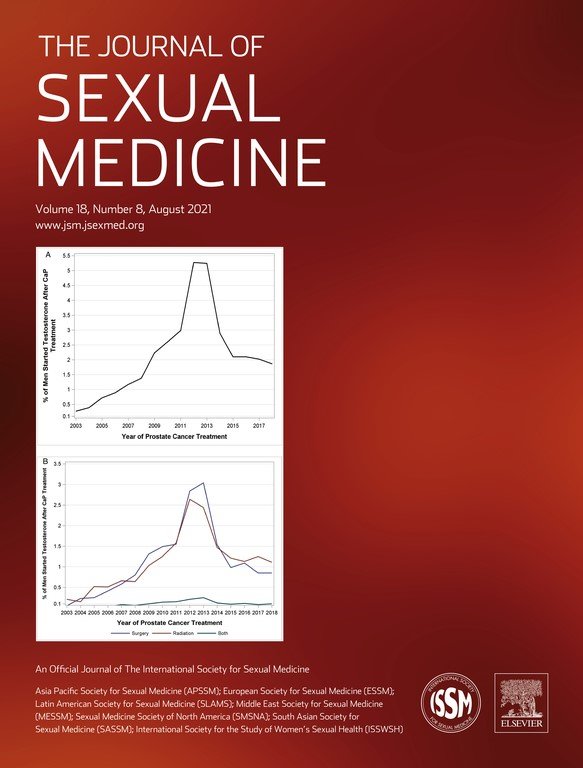
Mental Healthcare Utilization of Transgender Youth Before and After Affirming Treatment
ABSTRACT
Objective: Transgender and gender-diverse (TGD) adolescents experience increased mental health risk compared to cisgender peers. Limited research suggests improved outcomes following gender-affirmation. This study examined mental healthcare and psychotropic medication utilization among TGD youth compared to their siblings without gender-related diagnoses and explored utilization patterns following gender-affirming care.

What The New Administration Must Do On Day One To Tackle COVID-19
To turn the tide on the COVID-19 pandemic, the new administration will have to do a number of things beginning on January 20, 2021. First and foremost, a comprehensive response strategy and detailed plan must be communicated across the federal government, among states and local communities, and to the public.
Turn Intention Into Action
Abstract
To build and maintain an effective, agile force that is ready at a moment’s notice to deploy for national security missions, the US military must recruit approximately 150,000 new personnel annually while adhering to stringent medical standards. Given a target recruitment population of young adults ages 18–24, the health of the nation’s children is critical to US national security.
The Emerging Pandemic of Coronavirus and the Urgent Need for Public Health Leadership
There is ample precedent for public health officials directing the control of emerging pandemics. Perhaps most notably, in the early 1960s, Alexander D. Langmuir, MD, Director of the Epidemic Intelligence Service and Epidemiology Program at the Centers for Disease Control and Prevention (CDC) began to work closely with Donald A. Henderson, MD, Chief of the Virus Disease Surveillance Program at the CDC.
A Military Health System For The Twenty-First Century
Abstract
The Military Health System is one of the largest integrated health care systems in the United States. It is composed of a “direct care” system of military treatment facilities managed in a federated manner by the Army, Navy, Air Force, and Defense Health Agency and a “purchased care” component that consists of a network of health care providers managed through TRICARE.
A New Era in Quality Measurement: The Development and Application of Quality Measures
Abstract: Quality measures are used for a variety of purposes in health care, including clinical care improvement, regulation, accreditation, public reporting, surveillance, and maintenance of certification. Most quality measures are 1 of 3 types: structure, process, or outcome.
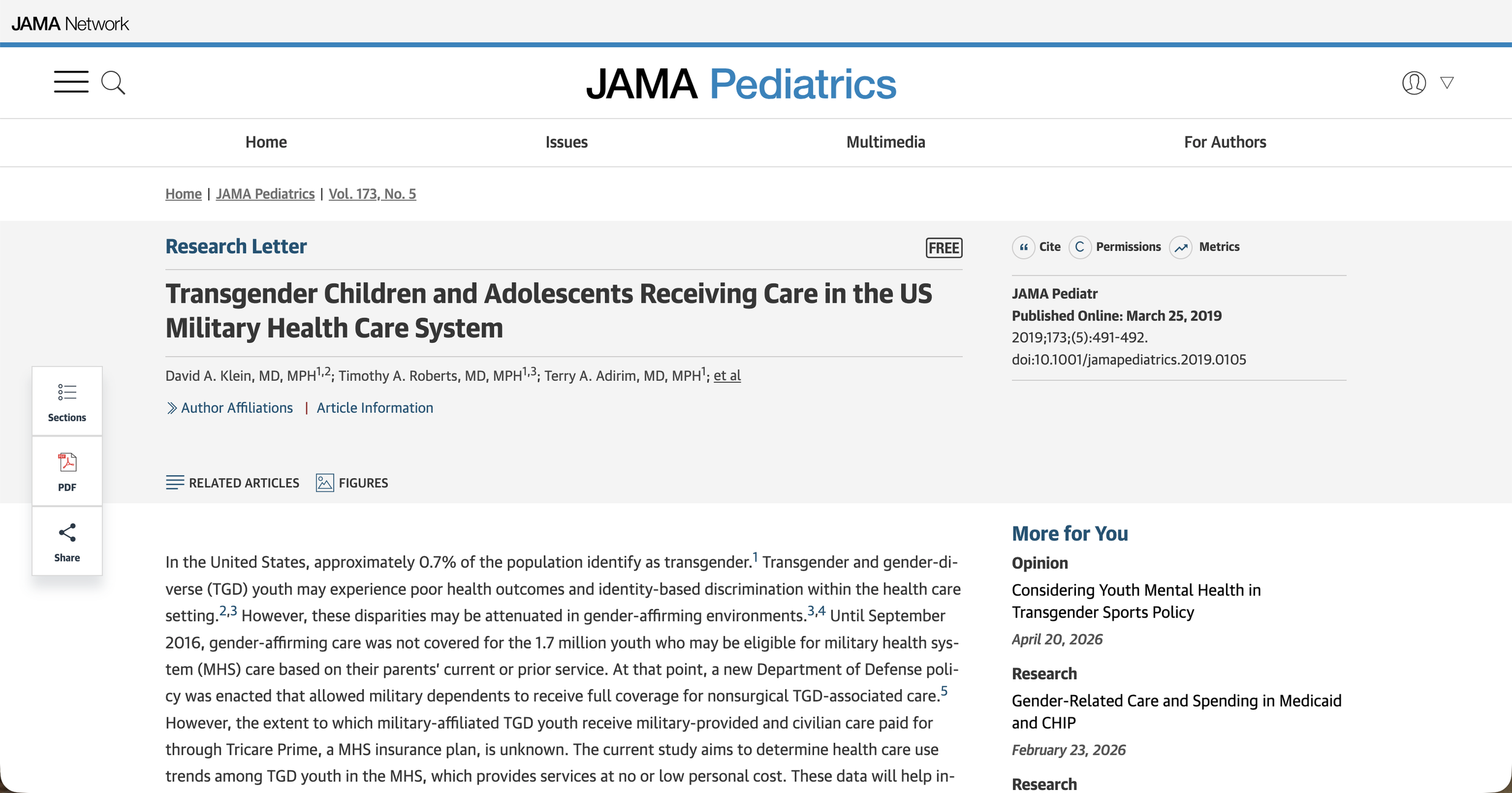
Transgender Children and Adolescents Receiving Care in the US Military Health Care System
In the United States, approximately 0.7% of the population identifies as transgender. Transgender and gender-diverse (TGD) youth may experience poor health outcomes and identity-based discrimination within the health care setting.
Principles of Pediatric Patient Safety: Reducing Harm Due to Medical Care
Pediatricians render care in an increasingly complex environment, which results in multiple opportunities to cause unintended harm. National awareness of patient safety risks has grown since the National Academy of Medicine (formerly the Institute of Medicine) published its report “To Err Is Human: Building a Safer Health System” in 1999.
Pediatric Medication Safety in the Emergency Department
Pediatric patients cared for in emergency departments (EDs) are at high risk of medication errors for a variety of reasons. A multidisciplinary panel was convened by the Emergency Medical Services for Children program and the American Academy of Pediatrics Committee on Pediatric Emergency Medicine to initiate a discussion on medication safety in the ED.
Development of a pediatric quality measure set for the military health system
Abstract
The Military Health System (MHS) is an integrated health care system composed of direct care and purchased care that serves over 9.4 million beneficiaries including 2 million children. The current MHS quality measures dashboard includes few measures specific to children and may not reflect the needs of military children.
Pediatric Readiness in Indian Health Service and Tribal Emergency Departments: Results from the National Pediatric Readiness Project
Abstract
Introduction: In 2014, 45 Indian Health Service (IHS)/Tribal emergency departments serving American Indian and Alaskan Native communities treated approximately 650,000 patients of which, 185,000 (28%) were children and youth younger than 19 years. This study presents the results of the National Pediatric Readiness Project (NPRP) assessment of the 45 IHS/Tribal emergency departments
Disclosure of Adverse Events in Pediatrics
Despite increasing attention to issues of patient safety, preventable adverse events (AEs) continue to occur, causing direct and consequential injuries to patients, families, and health care providers. Pediatricians generally agree that there is an ethical obligation to inform patients and families about preventable AEs and medical errors.
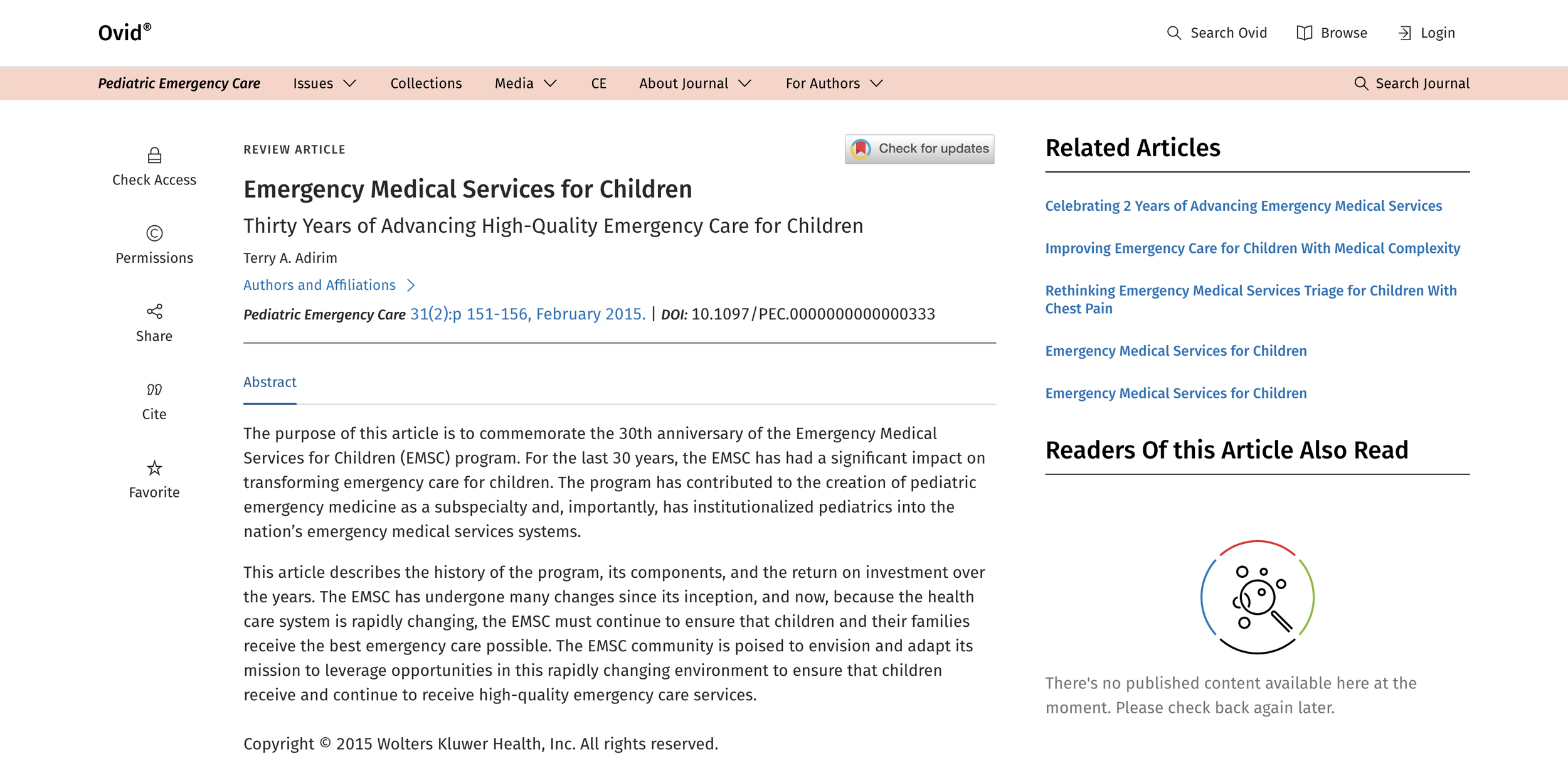
Emergency Medical Services for Children: Thirty Years of Advancing High Quality Emergency Care for Children
Abstract
The purpose of this article is to commemorate the 30th anniversary of the Emergency Medical Services for Children (EMSC) program. For the last 30 years, the EMSC has had a significant impact on transforming emergency care for children.
Overview of the Federal Home Visiting Program
On March 23, 2010, the President signed into law the Affordable Care Act (Public Law 111-148), which included an amendment of Title V of the Social Security Act authorizing the creation of the Maternal, Infant, and Early Childhood Home Visiting (MIECHV) program.